Some people are fortunate enough to be passionate about their jobs. They
are also probably familiar with the roller-coaster love-hate relationship that
comes along with this passion. This is especially true in grad school, where
passion for your (often outdoor) research is then traded for long hours at the
computer, doing data analysis and statistics. And I’m one of those people that
thinks statistics is fun, but after hundreds of hours, I’m often in the “hate”
phase of the roller-coaster. The solution? A week-long course explaining the
guts of statistical models, held in a spectacular location, that can re-ignite
your faith in statistics and even broaden (if possible) your love of nature.
This past week I took a course in mixed effects models, which happened
to be located in Banff, Alberta. (I had to convince my advisor that this was
not the reason I signed up for the course.) Banff is as spectacular as the hype
might lead you to believe – it reminded me of a cross between leafy-green New
England and Aspen Colorado (but with more epic-looking mountains). I had,
without doubt, the most amazing few days of wildlife viewing of my life. I
headed up to Moraine Lake at 5a.m. one morning for some dawn photography with
a friend from the modeling course, and in quick succession, we came across a
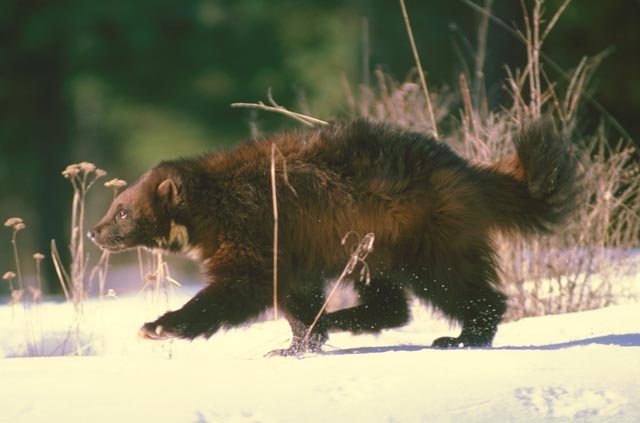
porcupine, 5 Snowshoe hares, 2 pika, and the incredibly elusive wolverine, an
animal that I never really expected to see in my lifetime. I saw its dark
shaggy back disappearing into the underbrush, and then it was gone.
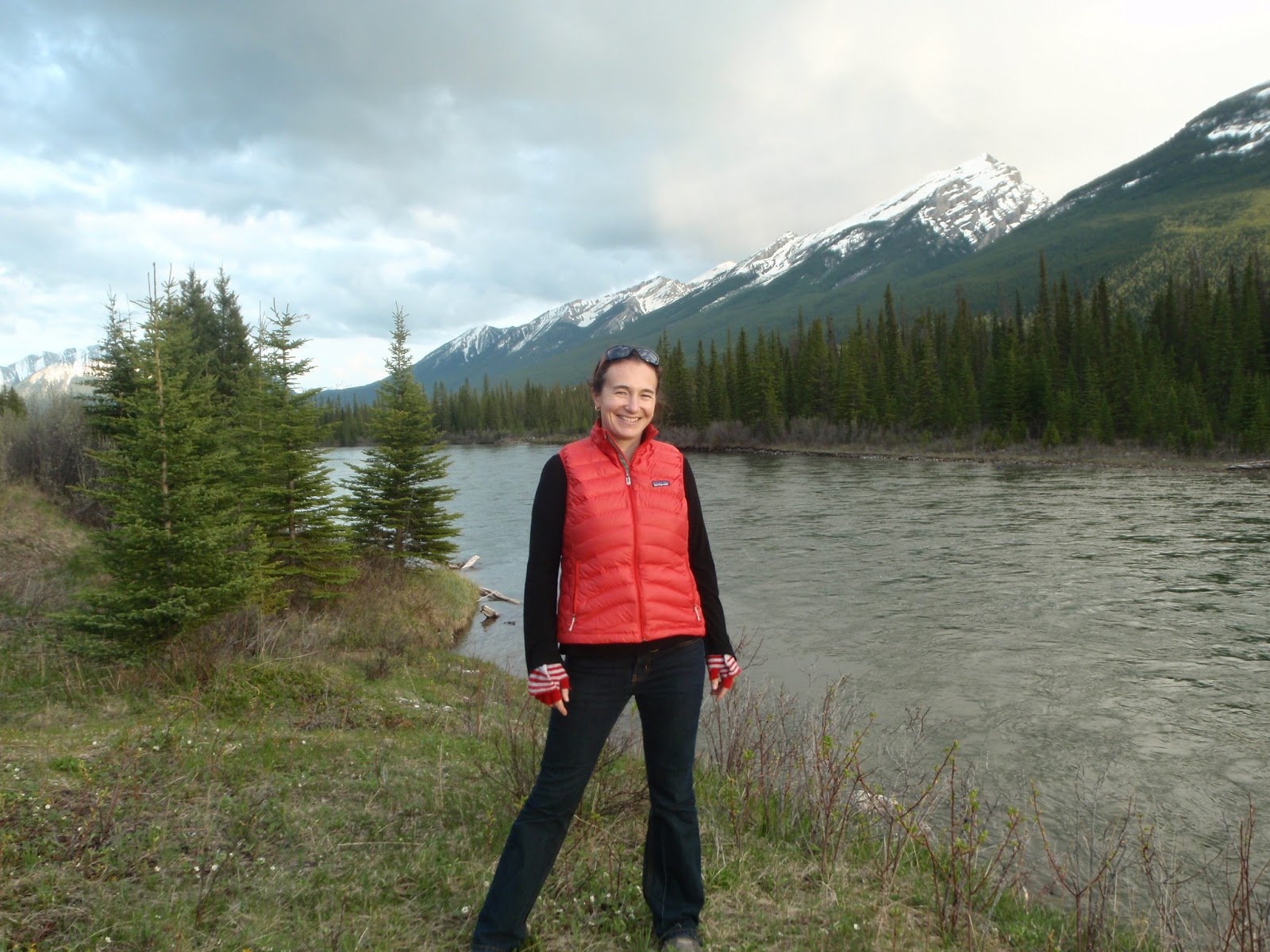
On the Bow River, north of Banff
A gray dawn at Moraine Lake
We spent daytime hours in a sort of endurance-learning fiesta – like
drinking from a fire-hose, as one girl put it – absorbing as much statistical
knowledge as possible while it washed over us in voluminous waves. But luckily
it was light from 5am-10pm, and we were able to explore before and after class…
and sometime during these days in Banff, I re-discovered my interest in birds. I’m
not sure why I’ve never really taken to birding – my husband is a birder, as
are many of my friends (one of whom is so enthusiastic that he plans to tattoo an
image of the 600th bird he sees onto his butt). But the fact is, I’ve
had only a passing interest… until this trip. Perhaps it was seeing the Great
Gray Owl close-up in a meadow one of the evenings, staring at us with
yellow-eyed suspicion, a bird I’ve been obsessed with seeing ever since
listening to its incessant evening hoots while living in Yosemite. Or perhaps
it was the early morning trip to Moraine Lake, where my birder friend was able
to pick out species after species from the dawn cacophony of calls, a language
he spoke but I didn’t. Regardless, my interest was piqued.
And really, when you think about it, why isn’t everyone obsessed with
birds? They are brightly-colored animals that FLY and are related to dinosaurs. Perhaps it’s a matter of novelty. If
birds existed only in Africa, we’d probably all be dying to take a bird-safari
to go see the colorful flying mini-dinosaurs. Who cares about lions!
So I spent my 3-days of backpacking in the Banff wilderness with
binoculars in hand, re-discovering the joy of stop-and-go hiking as I birded my
way along the trails. Incidentally, it helped my birding skills considerably
that I didn’t fall into my usual zone-out hiking style, due to the fear of a
grizzly round every bend. That’s pretty good incentive to stay alert. (It’s
also surprisingly hard to keep up a steady stream of whistling while hiking
uphill.) My birding efforts were rewarded by many cool species (see below), among
them a Ruffed Grouse that I nearly ran into, perched silently on a branch by
the trail. (Thankfully, since my only experience with Grouse has been as a
master of camouflage, staying perfectly still until you’re right on top of it,
when it explodes from the underbrush with a thunderclap.)
And so, like a meditation retreat, grad school-style, my week of
re-inspiration is complete. It’s hard to write engagingly about statistics, but
I’ll say that mixed effects models are immensely important for ecological
analysis, since they allow you to take into account (rather than ignore) individual
variation… which is pretty much a given in ecology. And for my data, which
features 200+ fish all behaving slightly differently, this is a definite
necessity for teasing apart any patterns. Data analysis, here I come (again).
Banff wildlife bonanza (e.g. all the species I saw during my trip):
A few weeks ago, I had the opportunity to help out a labmate with her research
on the Mokelumne River (and take a classic fish photo.) Unfortunately, I didn’t
catch it angling… an electro-fishing boat caught it. For those who haven’t
heard of this, it’s a boat that sends out pulses of electricity through the
water to momentarily stun fish, a common way to catch them for fisheries
research. Cheating? Perhaps. But the fish aren’t hurt, and it’s a whole lot
easier (though less fun) than fishing all day to catch your sample size quota.
Striped bass classic shot
E-fishing boat courtesy of collaborator EBMUD:
the hanging metal cables shock the water
We were up on the Mokelumne, which joins the Sacramento-San Joaquin Delta
near San Francisco, to remove all the striped bass from a pool below an
irrigation dam. California’s Sacramento-San Joaquin Delta is plagued by many
problems, and foremost among them is the conflict over water needs between
agriculture and ESA-listed native fish populations, including salmon,
steelhead, and Delta smelt. As a result, a lot of effort goes into trying to
figure out what is causing high mortality in native fish populations, and what
can be done to boost survival. One possible culprit: striped bass.
The last thing the juvenile salmon sees (looking down the striped bass gullet)
Striped bass are native to the Eastern U.S., and were introduced to
the west coast as a game fish, a sadly familiar story. (As an interesting
sidenote, Wikipedia lists many common local names for striped bass, including striper,
linesider, rock... and my favorite, pimpfish). Striped bass eat juvenile salmon
(see my post from last October), so one suggestion for boosting salmon populations
is to decrease predation pressure by attempting a large-scale striped bass
removal, through unlimited fishing allowances. But will this work?
My labmate is looking at an interesting aspect of this question. She
is measuring juvenile salmon mortality as the fish move past an irrigation dam,
both when striped bass are present in the pool below the dam, and when they are
absent (through removal). The idea is to see if salmon mortality drops
dramatically when the bass are absent, or if other predators in the system (some
of them native, like the pikeminnow) fill the predatory niche, making removal ineffective…
or perhaps even exacerbating the problem, since striped bass also prey on some
of the other fish that eat salmon. If striped bass are removed, this would
release these other predator populations from bass predation pressure as well,
and could potentially cause a sharp rise in other predator populations. (For a
more complete, interesting discussion of this topic, check out well-known
fisheries biologist Peter Moyle’s post on the California WaterBlog).
The fieldwork for this project was quite fun, involving many slippery,
spiny fish and a beautiful day in the California sun. I joined in for the bass
removal day, so a group of juvenile salmon had already been released through
the dam the previous day and mortality measured while striped bass were
present. We were there to remove most of the striped bass, prior to another
salmon release. To remove striped bass from the pool, an electro-fishing boat made
four passes through the pool below the dam, shocking the water and catching a
cross-section of the fish community each time. Striped bass key in on pools
below dams, where salmon coming through are funneled through a small area in
large numbers, providing an easy feast for waiting predators, so this pool is
usually full of bass around this time of spring, when juvenile Chinook are
out-migrating to the ocean.
The irrigation dam and pool
We took striped bass diet samples to get an idea of what proportion of
the bass diet is made up of juvenile salmon. This is done through gastric
lavage (aka making the fish barf by flushing them out with water). The only
downside to this is that the spines on the dorsal fin of striped bass are
surprisingly sharp, and fish are slippery and wiggly. Suffice it to say that I
got some war wounds.
Barfing a fish
One striped bass' breakfast
We then returned all other fish species to the pool, but retained the
striped bass and transported them to another river later that day. It will be
interesting to see the results of this research. However, I doubt very much
that removing all striped bass from the Sacramento-San Joaquin system will be enough
to cause significant increases in salmon populations. The Delta is a highly
altered system—it used to be an extensive wetland, and is now mostly
agricultural fields and channelized habitat—so extensive habitat restoration will
likely be needed to help restore native salmon populations. However, this is a
complex question that deserves its own post. Stay tuned.
But predator removal could well be a part of the solution, and
hopefully this study will help us determine whether this is true. Striped bass
for dinner, anyone?
The crew (fish and human)
And most importantly... when you're doing fieldwork in the sun all day,
you have to be innovative about how to keep the chocolate snacks from melting
When I give my ‘elevator-speech’ summary of my research—I study the effects
of hot river temperatures on juvenile salmon behavior and the importance of
coolwater refugia…—a common question I get is, ‘But why are river temperatures
rising?’ Sometimes people are a little abashed about asking, since it seems like
a simple question… but really, it’s a great question, and the answer has
considerable nuance.
A recent study of 40 rivers across the U.S. found that most showed
significant increases in water temperature over the past half-century.1
A combination of factors affect stream temperatures, including air
temperatures, amount of solar input, and land-use (e.g. urbanization, farming,
and river management). This makes sense both intuitively and from
experience—rivers in tropical climates are on average warmer than in the Arctic,
and small high mountain streams are colder than large rivers near their delta (where
they are both larger and less shaded, and are therefore open to a lot more
solar radiation).
Air temperature is a strong predictor of water temperature, and increases
in air temperatures due to global warming are causing a trend of increasing
stream temperatures.1,2 However, this is not the whole story. Urban
areas create ‘heat islands’ that can increase water temperatures both through
hotter ambient air temperatures, as well as heated water run-off from hot
pavement. In addition, land-uses such as irrigation and dams can exacerbate the
warming trend further, by storing water in slow-moving or shallower areas (such
as irrigation ditches and reservoirs) where it heats up before returning to the
river. For example, on the Klamath River where I do my research, the Iron Gate
Dam (lowest of 6 on the river) is an old dam that releases water downriver from
the top of the reservoir, water that has been sitting in the sometimes 100°F summer heat
all day. As a result, summer water temperatures on the Klamath can reach ~80°F (26°C), which
feels like bathwater, and is nearly lethal for coldwater-adapted fish like salmon.
There are many problems associated with rising river temperatures, and
not just for salmon. Warmer water temperatures can cause increases in primary
productivity and lower dissolved oxygen levels, effects that cascade up through
the ecosystem, changing aquatic habitat structure and availability, invertebrate
community composition, habitat suitability for many fish species, and often
making the ecosystem more susceptible to invasive species. On the Klamath
River, the summer hot water temperatures combined with eutrophication (excess
nutrients, often from farm run-off) cause massive green-algae blooms in the
reservoir by late summer, which get released downstream and turn the whole
river green.
The Klamath River during an algae bloom
Halting the trend in rising water temperatures is linked to the
problem of stopping increasing air temperatures (and rising atmospheric carbon dioxide),
and will not be a quick fix. However, there is significant mitigation and
restoration that we can do to lessen the impact of elevated water temperatures,
solutions ranging from urban greening to dam removal to in-stream habitat
restoration. This is where my research fits in—salmon are a coldwater fish, and
on rivers like the Klamath, summer water temperatures can reach levels that are
sometimes lethal. As a result, the fish seek out colder areas in the river
(coolwater refugia), often created by incoming coldwater tributaries. Protecting
and restoring these refugia are an important way that we can mitigate the effects
of hot summer rivers temperatures on salmon.
Juvenile salmon piling into a thermal refugia on the Klamath River (photo by Kyle Swann)
It’s important to note that knowledge of the long-term trends in river
water temperatures, as well as the data that produced the now famous graphs of rising
C02 trends, would not be possible without long-term monitoring
projects that were established years ago. These kinds of long-term programs are
hard to fund and maintain, yet are essential if we want to understand how our
environment is changing over time—this is an interesting problem that my lab is currently researching. Stay tuned!
1) Kauschal, S. et
al. (2010). “Rising stream and river temperatures in the United States.” Frontiers
in Ecology and the Environment.
2) Webb, B. et al.
(2007). “Long-term changes in river temperature and the influence of climatic
and hydrological factors.” Hydrological Sciences Journal.
I had the best fish and chips of my life last week, and I was nowhere
near England. We were traveling in Thailand and Laos for the past two weeks. In
Luang Prabang, Laos, a sleepy river town along the Mekong River, still touched
by the influence of French colonization (at least in cuisine and architecture),
after three days of weathering the near 110F heat (and ~80% humidity), we
treated ourselves to some Western food for dinner. I had a brief internal
struggle over whether I should order fish and chips in Asia, but then desire
took over, and I went for it. (However, I shouldn’t have worried, given the
deliciousness of the Pain au Chocolat all over town). And what I realized—in
between exclaiming for the 27th time to Pete how delicious it was—is
that I’ve never really liked fish and chips because of the fish (not because of
the way it was cooked). Fishy-tasting haddock has nothing on the light, fresh
Mekong mystery fish. Inevitably, this got me curious about Mekong fish species,
and the state of the fishery there.
Delicious Laotian food, featuring brown sticky rice and chicken laap
It turns out that the Mekong has the second highest
fish species richness in the world, surpassed only by the Amazon.1 Some of its native fish species look as though they
have been lifted straight from the Pleistocene—600lb giant catfish (which I
admit I fantasized would leap out of the water by our boat), and a freshwater
stingray that supposedly reaches 1200 pounds! However, in what is a sadly
familiar story, the fish diversity is threatened, as many of these species are
suffering severe population declines from a combination of overfishing, water
pollution, and upstream dams. This is particularly concerning for a country
where much of the rural population relies on local fish as the cheapest source
of protein.1 At the moment, the main threat to these fish is
hydropower development, which under certain development projections could cut
off 81% of the Lower Mekong Basin to fish migration, and turn 43% of the this
section of river into a reservoir.2 There are currently 16 dams in
the Lower Mekong, 47 more planned for completion by 2015, and 77-88 more to be
completed by 2030… an astounding rate of development.2 But unlike
the U.S., which is currently removing more dams than it’s building, many developing
countries are still in the dam building phase. As well as being concerning,
this presents an opportunity to research alternative, or at least more
environmentally sound, solutions. Perhaps we should move to Laos.
Mekong River at sunset, Luang Prabang
Local fish at market
We got to observe some interesting native fishing practices while in
Laos. On our daytrip up the Mekong to a cave full of over 4000 Buddha statues,
we saw people in small wooden fishing boats whacking the water with long
sticks. At first, we couldn’t fathom what they were doing—the parting of the
Mekong?—but then we saw them jump in the water and haul in fishing nets. Somehow,
slapping the water with the poles was encouraging, or even herding, the fish
into the nets. Unfortunately we didn’t have a chance to find out what kind of
fish they were catching… but perhaps it’s the same kind that ended up in my
belly later that night.
Fisherman on the Mekong
On the boat trip up to Pak Ou Caves
While I’m not sure what kind of fish was served up in the fish and
chips that warm night in Luang Prabang—the awkwardness of the language barrier
dissuaded me from asking—one way that we, as consumers, can have some sway over
the commercial fishery is by being informed fish buyers. My husband and I often
embarrass whomever we’re dining out with by asking the waiter where the fish
came from (yes, Portlandia style, although I usually forbear from asking the
fish’s name). In fact, on our trip to Thailand, we were eating out in an
elegant Bangkok restaurant with family, and Pete and I began discussing where
the salmon might have come from… only to be greeted by a snort of laughter from
across the table. My sister-in-law and her friend had made a bet that we would
ask about the salmon (while they cringed in embarrassment)… and indeed, they
were right.
In an interesting example of how effective consumer pressure can be, a
professor at UC Santa Cruz recently had his Marine Conservation class research which
food markets in town sold environmentally sustainable fish, and then create a
little pamphlet ranking them (red/yellow/green). Within a week, he got a call
from one of the yellow-ranked stores asking how they could change. They were
concerned about their public image. Shame, as it turns out, is an excellent
motivator. (Even more so than guilt).
We have incredible power as consumers. And the more people that ask
where fish comes from when they sit down to eat, the less socially weird it
becomes. As “dancing guy” shows, be the one to set the trend…
1) Mekong River
Commission (2010). "State of the Basin Report, 2010." MRC, Vientiane,
Laos.
2) Baran, E. et
al. (2012). “Fish Biodiversity Research in the Mekong Basin.” Ecological
Research Monographs.
What are the major causes of salmon mortality? Unsurprisingly, this is
one of the major questions in salmonid research. Of the thousands of eggs that
an individual adult female salmon lays, on average only 1-2 adults return to
successfully spawn. Salmon have a complex life history, spanning both
freshwater and marine realms; there are many opportunities for them to die
along the way, but it’s not always easy for researchers to parse out what’s
killing them, and at which life stage.
This week, I helped out one of my lab-mates who’s studying one aspect
of this complex question. She’s trying to figure out whether bird predation is
a major cause of juvenile steelhead mortality in several small creeks just north
of Santa Cruz, California. However, quantifying predation can be extremely
difficult—the challenge is not just to show whether one animal is eating
another, but also to quantify the predation rate (i.e. what percentage of the
out-migrating juvenile salmon population is being eaten?). To do this, she and
several researchers at the National Marine Fisheries Service lab in Santa Cruz
came up with an ingenious method. A local biologist discovered a PIT tag (a small
tag used to individually ID fish) on the nearby Año Nuevo Island, sparking the
question: are birds eating young salmon in the creek and estuary and then depositing
the tags (i.e. crapping them out) on the island?
The old foghorn keeper's house from the late 19th century
Año Nuevo Island is a beautiful state reserve just off the coast north
of Santa Cruz, and provides important breeding and resting habitat for Northern
Elephant Seals, California and Stellar’s Sea Lions, Rhinoceros Auklets,
Brandt’s Cormorants, and Western gulls. At this time of year, its beaches and
rocky terraces are teeming with wildlife—elephant seal pups, abandoned by their
mothers and resting until they’re ready to start their own ocean journey, lie
in adorable, fat, glassy-eyed piles. Huge droves of California sea lions blanket
the beaches as well, barking noisily. And Western gulls add to the relentless
cacophony; it’s a place that is at once peaceful and frantic, depending on your
mood and ability to filter out the constant noise.
Sea lions and elephant seals blanketing the beach of the island
Wallowing baby elephant seals
We made a research trip out to the island yesterday to search for the
PIT tags, heading across the ~1km stretch of ocean in a tiny dingy, banging the
sides to scare off over-curious marine mammals. Our mission was to use a PIT
tag detector to scan as much of the island as possible (marine mammals
permitting)—the detector picks up the individual tag ID if it’s near a tag.
Luckily, we didn’t need to actually find or retrieve the tags, since they are
about the size of a grain of rice. Data on how many PIT tags are found and the
detection likelihood, combined with data on total out-migrating salmon
population size, will allow us to estimate avian predation rates on juvenile
salmon in nearby creeks. In addition, the tags will tell us which particular
individual fish were eaten, allowing us to quantify the characteristics of
these fish to see if there is size-based mortality (i.e. were these fish
disproportionately small or large compared to the average size of fish in the
out-migrating population?)
Western gulls staking out their territory
Scanning for PIT tags
Estimating predation rates, as well as pinpointing potential
predators, is an important step towards good management practices. So what are
the potential predators that could be depositing these tags on the island?
Possible culprits include avian predators—Western gulls and Brandt’s cormorants
both use Año Nuevo Island for breeding—but also California sea lions, who also
eat salmon. Determining which of these possible predators is actually
depositing the tags on the island requires more (past and ongoing) research, including
several studies analyzing the diet and movement patterns of Western gulls.
Being a nature-lover at heart, most of the time when I hear about a
new National Park or designated wilderness area, I’m happy. However, I wasn’t
so sure about the recent wilderness designation of California’s Drakes Estero (just
north of San Francisco). The problem is not that it’s protected—I’m all for
preserving wilderness areas for the purposes of species’ habitat protection,
biodiversity, recreation, and just to make sure there’s no development in some of
our beautiful natural areas— but rather that in designating it as official wilderness,
it necessitated the shut-down of a historic oyster farm (open since 1932) that
provides about 40% of California’s commercial oyster supply. The root of the
problem, I believe, lies in how we define and view wilderness.
On Nov. 27th 2012, Secretary of the Interior Ken Salazar gave
Drakes Bay Oyster Company 90 days to shut down operations for good, since it
lies within Point Reyes National Seashore, and is therefore in violation of the
National Park’s mission and regulations. Drakes Bay Oyster Company has been producing
commercially-sold oysters since 1932. They pride themselves on being a
sustainably-run family business, a model of sustainable local farming.
They use no artificial inputs, chemicals, or feed, and are ranked as a “best
choice” on the Monterey Bay Seafood Watch list. This does not mean that there
are no negative environmental impacts of oyster farming in Drakes Bay—all human
activities and interactions with nature come with some associated cost-benefit
trade-off. The question is, what is that balance? The United States Wilderness
Act of 1964 defines wilderness as “an area where the earth and its community of
life are untrammelled by man, where man himself is a visitor who does not
remain”—this definition leaves little room for alternative uses of official wilderness.
And therefore, when Salazar made the decision to officially turn Drakes Estero
into a federally designated wilderness area, the oyster farm had to close.
Clem Miller
(or Bates from Downton Abbey?)
Point Reyes
National Seashore was first established in 1962 by Clem Miller, a congressman
from Marin Countywho envisioned an area protected from residential development, but that
would keep the historic ranching and oyster farming as part of the multi-use
park. (This was one of the reasons that it wasn’t originally designated as a National
Park.) Being a scientist, I wanted to understand the science behind these
decisions, and whether the environmental benefit of closing the oyster farm
outweighed the benefit of maintaining a locally sustainable farm that employed
about 30 people and provided almost half of California’s oysters. (And since
I’ve only recently come round to realizing that oysters are in fact utterly
delicious, it is even more sobering to think that there may be a serious
shortage of them in the near future).
Anne and I enjoying the fruits of the sea in Seattle
So, what are the negative environmental
impacts of oyster farming? There have been limited scientific studies done
on Drakes Estero and the impact of oyster production, but there are some (as
well as many studies on oysters in other systems). One potential problem is
increased nutrient load in the sediment as a by-product of filtration. Oysters
are filter feeders, gathering particles of phytoplankton and nutrients from the
water with their cilia. The problem is that all this particulate matter and nutrients is then
transferred (i.e. excreted) into sediment, creating potential anoxic (low
oxygen) conditions and smothering native eelgrass beds. However, studies in Drakes Estero have shown high flushing rates with the ocean, so excess/toxic sediment
does not seem to be a problem. The presence of the oyster company could also negatively impact
California harbor seal populations, which have their breeding grounds in the
estuary (20% of CA harbor seal populations comes there to breed). The threat to
seals is from human disturbance and the use of company motorboats rather than
the oysters themselves—seals will react when humans come within 90 meters. However, this
impact is not solely limited to the oyster company—hikers and kayakers could
have a similar negative impact. And there are potential ways to mitigate these disturbance
impacts, including the creation of large buffer zones or closing specific areas
during breeding season (March-June).
California harbor seals
Oysters being transported in Drakes Estero
Colonial sea squirt (Didemnum)
One common complaint about the Drakes Bay Oyster Company is that it
farms non-native oysters—the Pacific oyster from Japan (Crassostrea gigas). This species is now prevalent along the west
coast, having been introduced in the early 1900s (for aquaculture purposes)
after overfishing caused depletion of native Olympic oyster (Ostrea lurida) populations. Introducing one non-native species usually
brings others—associated parasites and epibionts—and there is currently a large
population of non-native colonial sea squirt (Didemnum vexillum) in Drakes Estero. As with any non-native
species, the concern is that the population will reproduce on its own and
expand, and may negatively impact (or out-compete) native species. This is a
risk associated with the Pacific oyster itself, and the potentially expanding Didemnum population. However, it seems
that at the moment, Didemnum is more
of a nuisance than anything else, fouling marine equipment and, perhaps its
biggest sin, being ugly.
As well as negative impacts, oysters offer significant benefits, both to
the local ecosystem and economy. Oysters can increase water clarity by
filtering up to 55 gallons of water a day—to put that in perspective, this is
~110 times what the average human drinks in a day, by an organism ~1/680 our
size. In fact, many areas including the Chesapeake Bay are working on large projects to re-establish native oyster populations, both
for economic and water quality benefits. One potential benefit of oyster aquaculture
in Drakes Estero is that it could mimic the historical ecological benefits of
the Olympic oyster (i.e. water filtration and creation of substrate habitat for
fish and invertebrates). How well they might mimic the native oysters’ benefits
depends on their relative abundance and biomass compared to historic
populations of Olympic oysters (which is of course not well documented). But
native oyster beds were likely integral to the original functioning of Drakes
estuary, before they were destroyed by humans (an original alteration of the
ecosystem). Which begs the questions… what is “wilderness”? What state exactly
are we trying to restore? The “wilderness” of the early 1900s? Or some mythical
wilderness of the 1500s that we can merely imagine (but that was managed, and
altered, by Native Americans)?
Impressive historic native Olympic oyster reefs
So what is my final take on this issue? I’ve gone back and forth
several times. The trade-offs, as I see it, are between deciding to preserve the land as wilderness, thereby
prioritizing the value of nature and species protection, or trying to conserve the land while allowing
multiple uses. Even full wilderness designation does not completely guarantee
that animals will not be disturbed—the National Seashore gets over 2 million
visitors a year, and the area relies on revenue from recreation. And there is
the additional consideration of the economic benefits of the oyster farm, both
in jobs and revenue. Without Drakes Bay Oyster Company, the Bay Area would have
to import ~38,000 pounds more oysters each week in order to meet demand, which will
in turn generate more carbon. Given all the trade-offs, minimizing the impact of the oyster farm through
strict regulations, while allowing it to still provide important jobs and
revenue for the region seems like it would be a good, and attainable, solution.
In the end, the decision about whether to close Drakes Bay Oyster
Company is not a simple one. It’s a decision that has even divided avid
environmentalists in the local community. It’s one of those decisions that
should make us pause and re-examine what exactly we are trying to accomplish
with designated wilderness areas. We need to protect natural areas for many
reasons, but we also need to provide food and jobs for millions of people. And
perhaps most importantly, if we want people to want to protect nature (a decision, I believe, that ultimately
comes from the heart), then we need to live with
nature.
Since it’s New Year’s resolution time, I’ve been pondering what this
year’s resolution should be. Last year, I borrowed my husband’s idea of
resolving to eat only “good” meat (i.e. organic, grass-finished, meat formerly
named Polly/Charlotte/etc.). As a fisheries biologist, I try to do the same
thing with fish by following the Monterey Bay Aquarium Seafood Watch
recommendations. However,
this can be hard when it comes to occasionally denying myself, especially two particular
kinds of fish – salmon and freshwater eel (aka unagi to sushi enthusiasts). While wild Alaskan is a good option
for salmon, many places (restaurants especially) carry farmed Atlantic salmon,
which is better to avoid. And as for eel, I’ve been putting off (with dread,
since I don’t think there are any at this point) looking into unagi
alternatives.
Since my favorite food is smoked salmon—and since it also happens to
be my study species—I’ve decided to look into the purported ills of farmed
salmon. Smoked salmon at the grocery store is often farmed Atlantic salmon. But
first, a quick aside to illustrate why this issue (e.g. finding good smoked
salmon to eat) is so close to my heart. I was about 9 when I first read C.S.
Lewis’s The Lion, the Witch, and the
Wardrobe. In the scene when the White Witch offers Edmund any food he
desires, he chooses Turkish Delight, and receives a bottomless tin full of
(enchanted) confection. Since, at age 9, I had no idea what Turkish Delight
was, I imagined a bottomless tin of smoked salmon – nothing could be better –
and to this day, any mention of Turkish Delight automatically makes my mouth
begin to water (and not for the candy). So, while I don’t think I’ve actually
been enchanted, I find it about as difficult to resist buying a package of
smoked salmon as Edmund found it to resist going back to the White Witch for
more Turkish Delight.
Edmund fantasizing about Turkish Delight
Turkish Delight (a far cry from smoked salmon)
So what is wrong with farmed salmon? There are several problems with
it, ranging from environmental impacts to serious health concerns. As with raising
beef cattle, it takes a lot of food to raise meat. But unlike cows, which eat
corn (well, not naturally, but that’s a whole other story), salmon eat fish, so
there’s a large impact on the marine food chain. It takes about 3 pounds of
other fish (mostly small pelagic fish) to produce 1 pound of salmon. In
addition, many studies have found that salmon feed is highly contaminated with toxins,
including PCBs and mercury, and this high toxin load gets transferred to the farmed
salmon (at much higher levels than are found naturally in wild salmon
populations).
Most farmed salmon, at this point, come from large aquaculture
operations in Norway and Chile. In general, the salmon are raised in large netpens
in near-shore ocean, a design resulting in pollution of ocean waters through
fish and feed waste. Pens can contain up to 90,000 fish. Overcrowded conditions
mean that disease and parasites run rampant, and can then be transferred to
wild salmon populations due to the open netpen set-up. In particular, sea lice (a
marine copepod) are a major concern (google image search them if you have a
strong stomach—I couldn’t bring myself to put the pictures up on my blog). There
have been studies showing the transfer of sea lice from salmon farms to wild pink
salmon, causing infection and mortality in the wild populations.
However, there are some promising innovations in aquaculture that may
mean better farmed salmon in the future. Closed, re-circulating systems prevent
many of the environmental problems, such as pollution and disease/parasite
transmission to wild salmon. There has also been some success rearing coho in freshwater
pens in the US—these farmed salmon are now listed as a “best choice” by Seafood
Watch (success!). In addition, innovations in net design are helping prevent
some of the disease and parasite problems by using antimicrobial copper alloy
netting.
So, after looking into salmon farming, I bit the bullet and did a
little research on why freshwater eel are listed as “avoid” by Seafood Watch. After
all, the first step to many things is knowledge. It turns out freshwater eel
have a fascinating life cycle. They are catadromous—this is the opposite of
anadromous (salmon’s life cycle), where the eels spend their life in
freshwater, but go to the ocean to spawn. They find their way to rivers as small,
immature, transparent eel (referred to as “glass eels”), and it’s at this stage
that they are caught in droves in order to supply eel farms raising unagi. Basically,
instead of raising eels from scratch (starting with eggs, as salmon hatcheries
do), eel farms find it easier to go catch the young wild eels, and use these as
a constant supply, thereby continually depleting already declining wild
populations.
Glass eel, the life stage when they're caught to bring to eel farms.
Declines in wild eel populations
So, herein lies one of the hardest personal debates about being a good
environmental steward. Do I completely deny myself a food I love, or allow
myself to have it very occasionally? There is a fine balance between enjoying
and living life, and also trying to live according to certain values. Where do
you draw the line? As with purchasing carbon offsets for air travel, can we go
out and do something proactive to protect fish populations every time we
indulge in another round of unagi sushi? This is a balance I, and many people I
know, continually struggle with.